Showing posts with label Diversity. Show all posts

Wednesday, April 5, 2017

Embodied Teaching in the Social Sciences and Humanities


Thursday, April 13, 2017
10:00 - 11:30 a.m.

Gender, race, ethnicity, religion, politics, and other aspects of presence can impact teaching and learning for both instructors and students. For nontenured professors, these elements can impact teaching evaluations. Come to this workshop to learn about best practices related to embodiment, and to share and learn about strategies from your peers.  

This session will be p
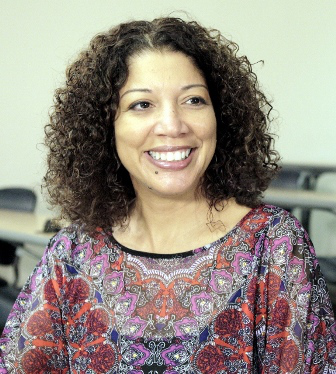
resented by Dr. Brandi Denison, Assistant Professor, Department of Philosophy and Religious Studies, a Faculty Fellow in the Office of Faculty Enhancement.

Thursday, April 13, 2017
10:00 - 11:30 a.m.


Keep updated with OFE:

OFE on Facebook

Monday, March 27, 2017

Embodied Teaching in the Sciences


Thursday, March 30, 2017
10:00-11:30 a.m.
Click to Register


Accents, gender, race, ethnicity, and other aspects of presence can impact teaching and learning for both instructors and students. For nontenured professors, these elements can impact teaching evaluations. Come to this workshop to learn about best practices related to embodiment, and to share and learn about strategies from your peers.  
This session will be presented by Dr. Brandi Denison, Assistant Professor, Department of Philosophy and Religious Studies, a Faculty Fellow in the Office of Faculty Enhancement.
Thursday, March 30, 2017
10:00-11:30 a.m.

Keep updated with OFE:
OFE on Facebook

Wednesday, February 22, 2017

TAing with Confidence


TAing with Confidence

Thursday, February 23, 2017
Online Learning Lab, Building 10, Room 1102
CLICK AND REGISTER

This seminar offers strategies for planning/leading discussions and break-out sessions, and provides a chance to connect with other University TAs. This session will be presented by Dr. Brandi Denison, Assistant Professor, Department of Philosophy and Religious Studies, a Faculty Fellow in the Office of Faculty Enhancement.

Thursday, February 23, 2017
Online Learning Lab, Building 10, Room 1102
CLICK AND REGISTER

Keep updated with OFE:
OFE on Facebook

Tuesday, January 26, 2016

Is there a Secret Sauce for Promotion and Tenure?

Is there a Secret Sauce for Promotion and Tenure?
Panel Facilitator: Judy Rodriguez, Chair/Professor, Nutrition and Dietetics
Wednesday, February 3, 2016 at 12:00 noon

President's Conference Room, Building 1, Room 2800
RSVP to mhanders@unf.edu 

Noodles and Networking: A Minority Faculty Learning Community is a pilot faculty community building initiative for tenure-earning underrepresented and ethnic minority faculty led by tenured minority faculty. The goal of this initiative is to create a network that supports the smooth transition of minority faculty at UNF and serve as an outlet for social, professional and community interactions. The President’s Office and Academic Affairs’ Office of Faculty Enhancement are sponsoring this initiative.

At this Noodles and Networking event, Dr. Judy Rodriguez, Professor and Chair of the Department of Nutrition and Dietetics will lead a panel discussion with Drs. Radha Pyati, Carolyn Ali-Khan, Claudia Sealey-Potts about the promotion and tenure process. Panelists will provide tips of navigating the process successfully and will address whether there is a "secret sauce" for promotion and tenure.
Come and join the conversation.

RSVP to mhanders@unf.edu

Is there a Secret Sauce for Promotion and Tenure?
Panel Facilitator: Judy Rodriguez, Chair/Professor, Nutrition and Dietetics
Wednesday, February 3, 2016 at 12:00 noon

President's Conference Room, Building 1, Room 2800

Keep updated with OFE:
OFE on Facebook


Monday, November 30, 2015

Noodles and Networking Event: Being an Effective Teacher

Being an Effective Teacher: Tips on Class Preps, Course Design and Classroom Management
Presenter: JeffriAnne Wilder, Associate Professor, Sociology
Tuesday, December 1st, 3:00-4:15 p.m.

President's Conference Room, Building 1, Room 2800
RSVP to codi@unf.edu 

Noodles and Networking: A Minority Faculty Learning Community is a pilot faculty community building initiative for tenure-earning underrepresented and ethnic minority faculty led by tenured minority faculty. The goal of this initiative is to create a network that supports the smooth transition of minority faculty at UNF and serve as an outlet for social, professional and community interactions. The President’s Office and Academic Affairs’ Office of Faculty Enhancement are sponsoring this initiative.

At this Noodles and Networking event, JeffriAnne Wilder, Associate Professor of Sociology will address tips for being an effective teacher. She will address the benefits of intentional course design, time management, and dealing with difficult issues in the classroom.
Come and join the conversation.

RSVP to codi@unf.edu 

Being an Effective Teacher: Tips on Class Preps, Course Design and Classroom Management
Presenter: JeffriAnne Wilder, Associate Professor, Sociology
Tuesday, December 1st, 3:00-4:15 p.m.

President's Conference Room, Building 1, Room 2800


Thursday, October 29, 2015

When Assessing and Correcting Personal Bias, Slow and Steady Wins

The first step in eliminating bias is acknowledging that a bias exist. However, few faculty members, or any other profession, are willing to acknowledge their own biases in the classroom. Although progress can come from large-scale change that trickles down into individual lives and everyday interaction, equally beneficial change can work from the bottom-up. Taking small steps on a manageable time scale to reduce our own biases can make all the difference.

Here are a few tips to becoming a little more equitable everyday.
1) Faculty are often tempted to grade students based on personal characteristics and their work, rather than solely on the quality of the work. Like many other mental shortcuts used for judgement and decision-making, making assumptions about another person saves massive amounts of time and are often accurate enough. Faculty may begin reading an assignment, stop and think, "So-and-so usually does great work," and, thus, skim the rest of the assignment with their mind already made up on what type of grade to give. However, when it comes to grading, using our first impression of a person is genuinely unfair. Students benefit when faculty take the time to thoroughly assess work for the work itself.

2) Whereas a faculty member may not be consciously biased, every human is biased on an unconscious level. If you don't believe that, follow this link and take the Race Implicit Attitude Test (IAT), Age IAT, or other available IAT. It's likely that you have no desire to act on your biases, whether unconscious or conscious, and simply becoming aware that you may be accidentally adjusting student performance evaluations or classroom experiences allows you to correct for biases.

3) Follow-up with yourself to continually evaluate how you are working to reduce your own bias.

4) Listen actively and empathetically to each individual with whom you speak. This allows you to look past surface-level characteristics and focus on content, substance, and quality.

5) Seek progress, not perfection. In other words, don't expect to ever fully eliminate bias, whether that's based on gender, race, age, or education level, because it is impossible to do so. But it's worth attempting to reduce as much as possible. By doing so, you are making a more fair and inclusive environment for your students.

Monday, October 26, 2015

Advancing Gender Equity in STEM Fields


Although great strides in gender equity have been made in recent years, STEM fields are among the areas where women still lag behind men. STEM (Science, Technology, Engineering, and Mathematics) has long been a boy's-club of sorts. The nature of these STEM fields in no way deters female participation by definition; women should be no less effective in these areas than men. However, STEM is intimidating for women because relatively few women are present in STEM fields. To close the gap, it would take a strong push to successfully initiate more women into these fields. A recent publication of the American Association of Colleges and Universities' Peer Review offers insight into this issue and how women can become more prominent in STEM. 

Thursday, October 22, 2015

Mentoring: One Way to Remedy Disadvantages Experienced by Minority Faculty


A recent interview has shed light on how being a part of a minority group can negatively impact faculty and what can be done about it. While assistance for minority students is discussed often in university settings, it is often assumed that faculty are on an equal playing field regardless of race, which is sometimes simply untrue.

Professor Olympia Duhart, J.D. (pictured) is the President of the Society of American Law Teachers and had several important points regarding the current state of minority faculty in large university environments. Minority faculty seem to benefit more than non-minority faculty from mentoring and guidance from other, more established faculty members, regardless of the race of their mentor. Mentorship helps to decrease the isolation and pressure to be more qualified than their non-minority peers that minority faculty often feel, by offering support, guidance, camaraderie, and validation. This relationship, as well as other forms of faculty community, can serve as a buffer to the negative effects of subtle, institutional racism and other forms of prejudice and help all faculty members thrive in their academic community.

The Commission on Diversity and Inclusion at UNF has established a mentoring network for minority faculty called "Noodles and Networking." Check out the list of upcoming events.

Noodles & Networking Event on Being a Proactive Mentee

Being a Proactive Mentee
Presenter: Radha Pyati, Chair/Professor, Chemistry
Monday, October 26, 2015, 3:00-4:15 p.m.,
President's Conference Room, JJ Daniel Hall, Building 1, Room 2800
RSVP to codi@unf.edu

Noodles and Networking: A Minority Faculty Learning Community is a pilot faculty community building initiative for tenure-earning underrepresented and ethnic minority faculty led by tenured minority faculty. The goal of this initiative is to create a network that supports the smooth transition of minority faculty at UNF and serve as an outlet for social, professional and community interactions. The President’s Office and Academic Affairs’ Office of Faculty Enhancement are sponsoring this initiative.

At this Noodles and Networking event, Radha Pyati, Professor and Chair of the Department of Chemistry will address how being a proactive mentee helps faculty get the most out of  mentoring relationships. Come and join the conversation.

Being a Proactive Mentee
Monday, October 26, 2015, 3:00-4:15 p.m.,
President's Conference Room, JJ Daniel Hall, Building 1, Room 2800
Please RSVP to codi@unf.edu, or contact Dedra Harris in the President’s Office at 620-2500

Monday, October 5, 2015

Frankly Friday Event - Gender Gap in Promotion and Tenure

Is there a gender gap in gaining tenure?
Friday, October 9th, 2015
9:30 a.m. - 10:30 a.m.

The Promotion and Tenure process at UNF is designed in a way to reduce bias and provide a fair chance for any qualified professor to receive tenure. A recent Stanford University study on the promotion and tenure process revealed that, given comparable research productivity, women assistant professors were in some cases 50% less likely to receive positive tenure decisions than their male counterparts. At UNF, the differences are much smaller, with 90% of men and 88% of women receiving tenure. As part of a recent Campus Climate survey at UNF, when faculty and staff were asked whether there were discriminatory practices involved in the promotion and tenure process, 18% indicated some bias whereas 82% indicated no bias.

We invite you to join the discussion. How should UNF address concerns over the gender gap in the P&T process?
OFE will provide the coffee and pastries.

Frankly Friday: Is there a gender gap in gaining tenure?Friday, October 9th, 2015
9:30 a.m. - 10:30 a.m.

Tuesday, September 22, 2015

Strategies for Online Discussion Forums

Do you have a strategy for managing discussions in your online courses? Some discussion topics seem to foster polarization and animosity. Online discussions of contentious issues can lead to "flaming" or emotional and anonymous venting. Online discussion forums may be one of the few places, however, that individuals have to discuss important issues with others who are different from them.

Anastasia Salter from ProfHacker has some suggestions for making online discussions safe and productive. Some suggestions include setting rules early and dealing with disruptive students.

Do you have some strategies that you think are effective?

Wednesday, September 16, 2015

New Research on Student Motivation, Success

Researchers have found new evidence that the motivation and success of students impacted by teaching and learning environments. In a series of studies, researchers at the University of Texas at Austin has found that two factors can alter student performance and success, in particular for minority students. The perception that their teacher cares about their improvement and overall well-being and performance, as well as the perception that they belong in their learning environment have significant effects on student motivation and subsequent performance.

Additional research by Stanford researcher David Paunesku demonstrates the importance of a "growth-mindset" to a students' motivation to succeed, which of course strongly impacts actual success. When students believe that success is based more on one's level of effort and dedication rather than unearned talent or raw intelligence, students were able to perform above their expectations and succeed in academic challenges.

The conclusions center around the following: 1) students who feel they belong and are supported in their efforts for success are more likely to succeed, especially if they are part of a group that historically has not been supported; 2) students who believe the key to success is being hard-working will perform more successfully than students who believe the key to success is being intelligent.

Click To Read The Article Here

Tuesday, March 3, 2015

Call for Proposals - Transforming STEM Education Conference

STEM Education has experienced a resurgence of interest, especially in the State of Florida, as Governor Rick Scott has made jobs in STEM fields a priority.  The Association of American Colleges and Universities (AAC&U) and Project Kaleidoscope (PKAL) have been leading STEM education reform for over 10 years. AAC&U has issues a call for applications to an upcoming conference on transforming STEM education. See the details below.

Crossing Boundaries—Transforming STEM Education

A Network for Academic Renewal Conference
Conference Date: November 12-14, 2015
Location: Seattle, Washington


Proposals Due March 18, 2015

The Association of American Colleges and Universities and ProjectKaleidoscope are pleased to announce their Call for Proposals for the 2015 AAC&U conference Crossing Boundaries—Transforming STEM Education.  Proposals are invited and encouraged to showcase evidence-based practices that reflect any of the themes below, and that can be adapted readily to a wide range of institution types, including community colleges and minority-serving institutions.  
We look forward to your proposals in the context of the four themes listed below.

Theme I:  Integrative Undergraduate STEM Teaching and Learning
This theme invites proposals for sessions that describe cross-disciplinary, innovative approaches for enhancing undergraduate STEM learning.  Proposals should represent research and/or practices from any disciplines that focus on achieving core STEM learning outcomes and/or development of research skills.

Theme II:  Inclusive Excellence/Broadening Participation in STEM Higher Education
This theme invites proposals for sessions that highlight theory driven models and innovations directed toward the recruitment, retention, and persistence of students from historically underrepresented groups in the STEM disciplines.  A focus on the career advancement of underrepresented STEM faculty is also appropriate.

Theme III: Supporting, Rewarding, and Building Capacity of STEM Faculty
This theme will focus on specific faculty development initiatives that are easily transferable to a diverse group of faculty and/or diverse institutions of higher education. Proposals that emphasize innovative reward systems for STEM faculty are encouraged, including rewards for work in online, hybrid, or blended venues.

Theme IV: Institutional Transformation for Undergraduate STEM Education Reform
This theme invites proposals for sessions related to campus-wide institutional change efforts designed to achieve undergraduate STEM education transformation for both faculty and students.  Proposals addressing how college is training K-12 STEM teachers to prepare students for college STEM courses and curricula are encouraged.

Visit the Call for Proposals to find out how to submit a proposal to share your work at this conference.

For more information, please call 202.387.3760, or write to Siah Annand at network@aacu.org.

Tuesday, November 11, 2014

Networking Event - International Education Week

Global Engagement Faculty Network
Monday, November 17th, 3:30-5:00 p.m.
International Center, Building 58E, Room 2300
RSVP to ofe@unf.edu

The International Center and the Office of Faculty Enhancement would like to invite faculty from around the campus to come and share ideas on study-abroad courses and international research over some wine and cheese. This event is part of International Education Week. Faculty will share advice and experiences from past study-abroad and international activities. Faculty interested in study-abroad or who would like to know more are welcome to attend. Bring a friend, mingle and enjoy a happy-hour and a half.
Monday, November 17th, 3:30-5:00 p.m.
International Center, Building 58E, Room 2300
RSVP to ofe@unf.edu

Tuesday, September 30, 2014

Report on Recognizing Community-Engaged Scholarship

Image: Loyola.edu
One of the sticky problems with advancing community-based learning at institutions of higher education is that faculty have difficulty finding reward structures that support their important community-based work. Many faculty have mentioned the need for change in the reward structures, but university-wide systems have been resistant to such change. The New England Resource Center for Higher Education (NERCHE) has recently released a report that addresses these issues in the University of Massachusetts system and provides some guidance for universities who are interested in changing the reward structures on their campuses.

One of the guiding statements from the report is that the, "... policies and cultures that
shape faculty behavior for career advancement have not kept pace with changes in
knowledge production and dissemination."   Please see the note below from the authors of the report. The hyperlink below provides access to the full report.


"It is our pleasure to send you the report The Challenges of Rewarding New Forms of Scholarship: Creating academic cultures that support community-engaged scholarship (http://www.nerche.org/images/stories/working_papers/Challenges_of_Rewarding_New_Forms_of_Scholarship_FINAL.pdf),
which is the result of a meeting of that took place on May 15, 2014 involving over 30 faculty and staff from all five campuses of the University of Massachusetts system. The seminar was funded with a grant from Bringing Theory to Practice and was hosted by the New England Resource Center for Higher Education (NERCHE) and Boston URBAN (Urban Research-Based Action Network).

"The purpose of the seminar was to examine a wide range of faculty rewards (including promotion criteria, awards, faculty development support, and policies at various levels) that provide incentives and rewards for faculty to undertake community-engaged scholarship. Community-engaged scholarship focuses academic knowledge to address real-world issues through mutually beneficial, reciprocal collaboration with peers outside the university who have locally grounded knowledge and experience.

"The report provides a set of findings and concrete recommendations for both the system office and the individual campuses for measures that can be implemented to advance community-engaged scholarship.

"Please do not hesitate to contact us if you have any questions.  It is our hope that the report can serve as a tool for catalyzing a deeper conversation on campus about supporting and advancing community engaged scholarship. 

Sincerely,

John Wooding and John Saltmarsh

John Wooding
Professor
Department of Political Science
University of Massachusetts, Lowell

John Saltmarsh
Director
NERCHE
University of Massachusetts, Boston"


Friday, June 13, 2014

Place Matters Partnership Conference

photo by jzlomek
Faculty interested in community-based learning may be interested in an upcoming conference on campus community partnerships hosted in part by the Pennsylvania Campus Compact and Albright College. See the details below.


Place Matters: Partnerships Between Institutions of Higher Education and their Local Communities


September 12, 2014

Albright College, Reading, PA


To celebrate the opening of its new Center for Civic and Global Engagement, Albright College, in partnership with PA Campus Compact, the U.S. Department of Housing and Urban Development’s Office of University Partnerships, and the Federal Reserve Bank, will be hosting a conference to explore how colleges and universities can work with local partners to positively impact the quality of their communities and provide transformative learning opportunities for their students. This one-day conference will include a keynote speaker, panel discussion, workshops, poster session, and networking. Please plan to join participants representing higher education, government, NGO’s, and economic development entities.
Registration opens July 15, details forthcoming.

To learn more, visit: http://www.huduser.org/portal/pdf/SaveTheDate_sheet_2b.pdf

Friday, April 11, 2014

Difficult Conversations: Starting a Dialogue Across Difference


Join faculty from different disciplines for a Scholarship of Teaching and Learning (SoTL) panel discussion on 
Difficult Conversations: Starting a Dialogue across Difference
Wednesday, April 16th, 12:00-1:30 p.m.
Talon Room, Building 16, Room 4202
RSVP for lunch: ofe@unf.edu

Faculty from different disciplines will address how to help students have some of the most difficult conversations across differences, including those tense conversations about group work and the lack thereof, and about differences across social divides. UNF faculty will share research and tips about facilitating these discussions and the potential long-term impact of engaging students in dialogue across difference. Lunch will be provided for those who RSVP at: ofe@unf.edu


Tuesday, March 25, 2014

FLOWHE Quarterly Meeting

FLOWHE, the Florida Office of Women in Higher Education, the Northeast Chapter, will hold their quarterly meeting on Friday, April 11th, 2014.

What Your Wardrobe Says about You - with Gari Greenwald
Friday, April 11, 2014, 11:45-1:00 p.m. 
Talon Room, Building 16, Room 4202
 Click here to register!

Gari Greenwald is a wardrobe consultant who moved to Jacksonville from Atlanta in 1996.  She has a degree in Fashion Merchandising from the Art Institute of Atlanta and has established her own business working with individuals on developing their own personal style and learning what works best for their body type.  Her presentations include “How to Dress for an Interview”, “How to Dress for Your Body Type” and “How to Dress for the Workplace”.  As an expert in the field, she has appeared on WJXT’s The Morning Show and several other media outlets  in Florida.  She is also a former instructor at the John Casablanca’s Modeling and Career Center and has published articles for Women’s Digest and Senior Times.  Visit her website at www.wardrobemaven.com for more information.  

Brought to you by the Florida Office of Women in Higher Education(FLOWHE). 
Attendance is free but you must reserve your spot!
You can also order lunch in advance for only $15 – Click here to register!

For more information, contact Karen Arlington at 904-997-2645 or karen.arlington@fscj.edu or Dr. Christine Holland at(904) 620.3823 or cholland@unf.edu