Showing posts with label Higher Ed. Show all posts

Wednesday, March 29, 2017

Faculty Innovation Team (FIT) Meeting


Monday, April 3, 2017
4:00-5:00 pm

Faculty are invited to join the Faculty Innovation Team, a group of UNF faculty who care about student engagement and student learning and who are not satisfied with just getting students through a course. We will share ideas, post instructional videos, and participate in collaborative teams to support each other in classroom observation.


Monday, April 3, 2017
4:00-5:00 pm


Keep updated with OFE:
OFE on Facebook
 

Friday, February 10, 2017

The Shared Benefits of a College Degree

Publicly-funded education has long been considered integral to the health of our country. In 1822, James Madison noted, “learned Institutions ought to be favorite objects with every free people. They throw that light over the public mind which is the best security against crafty & dangerous encroachments on the public liberty.” He goes on to advocate for public funding of education as a path towards equal opportunity, noting “Without such Institutions, the more costly of which can scarcely be provided by individual means, none but the few whose wealth enables them to support their sons abroad can give them the fullest education… At cheaper & nearer seats of Learning parents with slender incomes may place their sons in a course of education putting them on a level with the sons of the Richest.”
How has public funding for Florida colleges fared in the past decade? According to a recent study by the Center on Budget and Policy Priorities, state funding has been cut 22.7% since 2008, a reduction of $2,132 per student (a glimmer of hope is that since 2015, Florida has increased funding 3.5%, or $244 per student). As a result of public finding cuts, institutions have been forced to raise tuition costs. Indeed, Florida’s universities increased tuition costs by an average of 64.3% between 2008 and 2016, a hike of $2,490 per student. Florida is not unique in this, and these data point to a worrying national trend in higher education: less state funding and more reliance on students to carry the load of the cost of college education – many by taking on substantial student loan debt.

In a recent article in the Chronicle of Higher Education, Philip Trostel argues that making cuts to higher education is easier when law-makers emphasize private, individual benefits of a college education (e.g., higher annual and lifetime income, longer life expectancy, more access to higher-quality healthcare, higher retirement accounts). When the value of higher education is framed on these individual benefits, law-makers and citizens alike often exclude discussions of the larger societal goods that result from higher education. Trostel argues that the notion of an educated populace as a public good has been completely omitted. With that omission, and the prevailing notion that private goods are best served by private means, financing of higher education has been deemed better-served by the free market, and not by public funding of universities.

Making higher education out of reach for those, as Madison suggests, with "slender incomes" has the consequence of inadvertently diminishing the "public mind" and threatening "public liberty." Shifting the narrative of the benefits of college education away from private gains to public gains might not change much in the short term. Over time, focusing on the shared social goods a society receives from college graduates can bring wider support for more public funding to achieve those aims, supporting a public that is ready to defend their public liberties.

By Greg Rousis

Keep updated with OFE:
OFE on Facebook

Saturday, April 9, 2016

How Can Profs Keep Students' Attention? Put Them in Charge


It's important for faculty to work their hardest to ensure their courses, especially when they are long or comprised of tedious or difficult subject matter, hold their students' attention and keep them engaged. Because it can be so easy for students to drift mentally in class (research purports that college students retain only 10% of material covered in lecture-based courses), it is critical that faculty employ new and creative ways to hold engagement high and get students involved and thinking critically.

Raymond Benton, Jr., a professor at Loyola University Chicago, has managed to put a new spin on an active-learning classic. In what is known as a "jigsaw classroom", students are divided into subgroups within the class, with each subgroup learning a specific topic that they then teach to the rest of the class. Each subgroup member becomes an expert in their allotted area, and the subgroups must educate each other in order to complete an overarching assignment that all groups must complete as a class.

In Benton's version, the "jigsaw classroom" puts students in control of more than learning and communicating information in a given course topic. In an example he provides, a small class of students are given three assigned readings, all of which teach student must read before class, and are randomly assigned to a reading group and a discussion group. In each reading group, the students discuss one of the three articles thoroughly, comparing their own conclusions and understandings of the article. They become experts in that one article, knowing that the other group members will ask questions about that article they will be responsible for answering. Next, they discuss what they did not fully understand about the other two articles and form a list of questions for the other groups. The students then move to discussion groups, in which article "experts" are represented equally, and ask and answer questions and engage in conversations about the articles. Students then reconvene in their original reading groups to compare the answers they received from other groups and share how they answered questions about their group's article. Finally, the professor regroups the entire class to have a class discussion debriefing what they learned about all the articles.

This method is rich with opportunities for active critical thinking and deep levels of processing that will allow students not only to pay attention, but also to engage with the course material in ways they would not remotely approach in a traditional lecture.

Keep updated with OFE:
OFE on Facebook


Tuesday, April 5, 2016

Altitudes - Reaching to New Heights

Over 15 years ago, the Office of Faculty Enhancement was founded at UNF by efforts of the Faculty Enhancement Committee of the Faculty Association, and the efforts of the Founding Director, Dr. David Jaffee. We recently discovered the original newsletter from the founding of OFE. The thoughts of the Director at that time seem to ring true today.

"While the OFE mission statement points to the central objectives and activities, there is an underlying premise that drives the work of this office – that academic faculty do not stop 'developing' after they gain employment in the academy. Like other professionals, faculty members continue to learn, and experience intellectual and professional growth, throughout their academic career. The purpose of the Office of Faculty Enhancement is to provide the resources and support and an environment that advances all forms of continuous professional development in the various faculty roles of educator, learner, scholar, and researcher."
 - from Altitude, an OFE Newsletter, Volume 1, Issue 1, 2000, by David Jaffee, Founding Director

Keep updated with OFE:
OFE on Facebook

Monday, April 4, 2016

Alternatives To Traditional Final Exams Encourage Student Engagement, Learning

When students leave college classrooms at the end of the semester, what are they really taking away with them? Too often, courses culminate in a student turning in a traditional multiple-choice final exam, quietly muttering "Thank you" to the professor, and walking out of the lecture hall having learned little of substance that will stay with them for more than a couple months. The suggestion to exchange final exams for semester 'finales' may seem far-fetched, but the idea might have practical value.

The most common reason students walk out of a course without having learned meaningfully is that they never made course material relevant to themselves. Past research indicates that students experience greater levels of motivation to learn when their teachers make content personally relevant to the students. Personalizing knowledge by putting it into one's own context is all that it takes for students to understand more deeply, rather than just hearing information, memorizing it, and regurgitating it without having ever really thought about it.

There are plenty of examples as to what a semester "finale" might look like. In general, they all focus on giving students an ultimate experience they can use to make course material personal and practical for them- something they can take with them into their future. The idea is to get students thinking,especially on the last day, so they can leave the course still mulling over what they've learned and how it can continue to apply to their intellectual life. Presenting students with just one particularly novel, perplexing question, for example, and asking them to solve it within a confined time is one way to change the final assessment paradigm. Perhaps instead of a final exam, the last day of the course could be a rubric-outlined debate or a collaborative assignment.

The point is, there is a serious lack of genuineness and creativity in the way most professors assess their students at the end of their courses. Final exams as they stand now often make the end of the semester feel more like a chore than a crescendo of an academic experience. By adding a little novelty, a little intrigue, and a little excitement, professors can create an end of the semester assessment that students will be talking about, and thinking about, long after the course is finished.

How do you add creativity and engagement in your final exams?


Keep updated with OFE:
OFE on Facebook


Thursday, March 10, 2016

Use Technology To Help Curate Your Tenure Portfolio

Tenure-track faculty are asked to keep track of their most important contributions from the very moment they are hired. That body of work, sometime in the future, will be used to determine their worthiness for receiving tenure, and must be managed diligently in the meantime. Over what can be a very long period, one of the biggest challenges of creating an excellent portfolio to showcase one's entire career up to that point is simply keeping track of everything. That's where technology can be a game-changer.

Robert Talbert, a mathematics professor at Grand Valley State University and contributing writer for the Chronicle of Higher Education blog, says that technology can help faculty preparing for tenure selection work smarter, not harder. Instead of relying wholly on traditional storage and hoping that, on submission day, everything is in the binder that's been accumulating important files for years, he suggests using some technological assistance to keep disciplined and organized. At the core of his advice is that you can use technology to implement a system you trust that can easily be categorized and searched that you are able to easily organize and settle on a weekly basis. This allows you to make sure you are staying ahead of the constant influx of materials you must track, such that you can rest easy knowing each item that came across your desk or screen is safely vaulted where you can access it easily at a later time if necessary. Talbert recommends using converting all paper documents into electronic formats using a scanner, then keeping track of them using a free storage and organization service like Evernote, Dropbox, a combination of both, or some other means. Talbert goes into pretty specific detail about how he recommends using Evernote and Dropbox to prepare a portfolio. But the basic takeaway is this: if you're preparing for tenure selection, get organized with technology or be risk being overwhelmed when your time comes.

UNF will be hosting two two vendor demonstrations for electronic tenure and promotion portfolios on Friday, March 11th: Interfolio’s By Committee (12:00-1:30pm) and Data180’s Faculty180 (2:00-3:30pm). Both demonstrations will be held in Building 51, room 1205. Faculty are encouraged to come out, ask questions, and provide feedback on these digital systems for managing the promotion and tenure documents and process.

Tuesday, February 16, 2016

Math Motivation Moderates the Effect of Math Anxiety on Math Performance

Mathematics is perhaps the most-feared school subject across education, from students in elementary schools to universities. There is a wealth of research providing evidence that math performance and math learning have negative relationships with math anxiety. Unfortunately, the more anxious one becomes about their math performance, the worse they will be at learning and performing math skills.

Math anxiety contributes to a performance gap in STEM fields for minority students and women, who report more anxiety in math-related fields than their White male counterparts. But is it really as simple as, "If math makes you nervous, you won't be as good at it"? Recent research indicates that that's not the whole story.

A 2015 study, researchers, brings some new evidence to the discussion. The authors underscore that, yes, past research has shown that math anxiety diminishes math cognition, stunting both math performance and learning. However, anxiety tends to have a curvilinear relationship with complex cognitive tasks in general, such that more anxiety correlates with increased performance, but after a certain point, increased anxiety begins to correlate with decreased performance. When this relationship is graphed it is shaped like an upside-down U (similar to a parabola, as a matter of fact).

What researchers found was that math anxiety and math performance had a curvilinear (inverse-U) relationship, but only when the students had a high intrinsic math motivation. Those with low math motivation showed the typical negative linear relationship between math anxiety and performance, that is, as anxiety increased, performance decreased. The moderating effect of motivation on the relationship between math anxiety and performance was found for both children and adult college students.

This research demonstrates that there is a a complex interaction of emotional and cognitive factors that impact learning and performance. For math, it seems, anxiety can be harnessed as a useful learning tool for those with high intrinsic motivation. Those with low intrinsic motivation around math are best to avoid panic.


Friday, February 12, 2016

Using Rubrics Adds Depth to Analytical Learning

In recent years, higher education has moved in a utilitarian direction, refocusing on the purported purpose of post-secondary education- preparing its students to live and work after graduation.

Many faculty have begun to show a preference of active learning, a strategy that fosters critical and analytical thinking about material and its application. Recently, support has risen for utilizing rubrics as a way to support effective teaching. Rubrics, scholars suggest, have many uses in university classrooms to stimulate active learning by increasing the quality and quantity of student performance.

Rubrics bring clarity and order to assignments that are more subjective and require more abstract thought than multiple-choice or fill-in-the-blank style questions. However, the benefits of using rubrics can go much further than that. Rubrics help to ensure quality by providing criteria for what different levels of manipulation and understanding of material are worth in terms of grading. Best of all, because students have a means to assess their work as they are completing it, they engage in the critical thinking required for self-evaluation.

Rubrics can be used in creative ways to boost energy in the classroom and enable students to view material from novel standpoints. For instance, a rubric might be used as a means for students to think like their professor if they are asked to write a rubric for their own assignment or use a rubric to grade their own work or those of their peers. When students create rubrics or grade using a rubric, they are applying course knowledge in a more complex and applied way than a typical assignment may require. Classroom practices that include rubrics hold great potential in stimulating deeper levels of thought and engagement with material by forcing students to think analytically and critically.

Thursday, February 11, 2016

Survey Finds Support and Concern for Contingent Faculty Wanting

Results of a recent survey from the New Faculty Majority, a national coalition for adjunct and contingent faculty equity, provides evidence that working conditions do not provide adequate resources or support for non-tenured faculty on higher-education campuses. The survey polled 400 contingent faculty members across 33 states in 2015, building on the results of the same survey administered in 2011. The results, which have changed little since 4 years ago, show some startling realities for contingent faculty members to which tenured faculty members simply are not exposed.

The conclusion here is that most post-secondary institutions do not prioritize contingent faculty when considering whom of their employees need to be supported seriously or compensated fairly for their work.

Some of the most jarring results are related to the livelihoods of contingent faculty, Despite the fact that forty-five percent of contingent faculty receive less than $20,000 per year from their teaching, seventy-three percent derive most of their income from their teaching positions and two-thirds of them have actively sought or are seeking tenure-track positions.

Other than the difficulties of supporting themselves, contingent faculty also face difficulties in securing the infrastructure and support they need to teach effectively. More than half of contingent faculty reported never being provided access to an office phone at at least one appointment, twenty four percent reported having no computer access at all at at least one appointment, and twenty-eight percent reported never being provided with office space at at least one appointment.

Contingent professors also suffer from a lack of guidance and attention from their university or department administrations. A full 70% of contingent faculty reported that they had never received any departmental or institutional orientation when they first began a new teaching appointment. More than half of contingent faculty have had to prepare to teach courses with less than three weeks' notice, and 23% percent have had to prepare to teach courses for which they never received curriculum guidelines.

All of this forces the question: Do institutions of higher education realize how much of the teaching load contingent faculty bear, and how do they support contingent faculty in lifting such a load?

Keep updated with OFE:
OFE on Facebook


Wednesday, December 2, 2015

Student Evaluations of Teaching Useful - in Context


Students' evaluations of professors have great value for administrators who seek an accurate
assessment of the quality of teaching at their universities. This is in turn drives their decisions regarding faculty promotion, pay rates, and termination.

One of the problems with placing such heavy weight on student evaluations in making decisions about faculty employment is that students don't always give valid feedback. Students, like most people, don't always play fair. Students will sometimes give poor scores (not to mention rude comments) in evaluations, not because the scores are warranted, but because they felt the class was too challenging or made them work too hard. When these ratings are included in aggregate, they punish professors who simply teach difficult courses or demand high standards from their students.

How can student evaluations be more useful? A recent article outlines some suggestions on using student evaluations of teaching more effectively. The best ideas seem to revolve around cross-checking teaching quality using measurements other than student evaluations alone. For instance, finding innovative ways to assess how much students are learning by the end of their courses, rather than asking them to solely self-report how much they liked the experience of the course, is one way to supplement assessment. Other ideas that have been successfully implemented include classroom observations (both scheduled and surprise) by administrators or senior faculty, spot-checking faculty practices feedback on assignments, and including multiple iterations of student evaluations throughout the semester to give professors a chance to adjust their strategies. The Office of Faculty Enhancement at UNF provides a number of alternatives to end-of-semester student evaluations.

Context is very important in using results from student evaluations, especially because research has shown positive correlations between students' expected grades and their evaluation scores. Essentially, student evaluations are important because they provide direct feedback on how students feel about their professors' ability to educate them. However, they do not tell the whole story, must be taken in their rightful context, and need accompaniment to be used as a key metric in faculty assessment.


Monday, November 30, 2015

Should Students Write Their Own Exams? The Benefits of Innovation

Two marketing professors are espousing the view that traditional college exams, in which a professor writes an exam to assess students' knowledge of course learning objectives, may not be the most effective way to motivate students to learn. Their proposed alternative? Students write their own exams. While it is well-known that humans learn more effectively when they must manipulate materials and ideas to create a new product, rather than simply regurgitate information, many professors would undoubtedly be uneasy with the idea of students writing and taking their own exams.

In their study, the researchers asked students to create exam questions based on a range of recently covered course materials (like most exams) and then answer the questions they had written for themselves. Students were given specific guidelines in terms of what content they needed to cover in their questions, what practical learning objectives the exam should address, and the rubric that would be used to grade the exam. The questions were meant to be predominantly multiple choice, with one short essay question. Students wrote and answered their questions and brought them to class, where the normal time used to take the exam was used instead to discuss questions and answers, during which time students could alter answers, but not questions, if they wished. Then, students turned in their exams to be graded by the professors, who graded them based on the extent to which questions covered relevant course content and learning objectives, how challenging the questions were, and the accuracy of the answers.

The results may be surprising to those outside academia, but really shouldn't surprise any professional educators. Follow-up assessment showed that this method improved student learning outcomes. Because students had been forced to utilize the material at a higher level of processing, by analyzing, evaluating, and creating course information instead of memorizing and occasionally applying it, students learned more deeply. Students were thinking critically about material in the same way their professors had to in order to create an exam that would test student knowledge fairly and comprehensively. When they were required to think like those who have mastery in the subject, they were able to better approach mastery themselves. Although students reported that this method is more challenging than traditional exams, they also reported that they were more motivated to learn as a result and that their exam experience was less stressful. Although this alternative to traditional testing in higher learning is not perfect, it is an important reminder that when faculty stop thinking about education as a static system and start incorporating viable fresh perspectives, students are able to make breakthroughs in the quality of their learning.

Friday, November 20, 2015

Is Your Grading Biased? Beware the Halo Effect


Humans are prone to taking mental short cuts, it's part of the physiology of our brains. We are exposed to so much information throughout our lives and from day-to-day that it is necessary for our brain to utilize mental short-cuts (i.e., heuristics) to help sort information and to determine what should grab one's attention. Heuristics are mental guidelines you create from your experience to help you reach an answer more quickly than by algorithm searching through every possible answer. The only problem is that this quick thinking can also bias cognition and decision-making, and grading is no exception.

The Halo effect is one form of heuristic bias that impacts everyone's decision making. It happens when we find good qualities in an individual and, through experience, incorporate those good qualities as part of our perception of the person. This biases the way we perceive their actions, whether good or bad. For instance, attractive individuals are often perceived to be more intelligent, talented, and generally good more often than individuals of average attractiveness.

The Halo effect can produce biases in grading just like any other area of judgment. In a previous post we discussed briefly how faculty will frequently grade students based on their personal characteristics and past performance rather than solely on their performance on the work in question. Faculty may begin reading an assignment, stop and think, 'so-and-so usually does great work' and allow that judgment to alter the way they grade the assignment.

This bias in judgment and decision-making process is exactly what researchers found at work in a study examining the Halo effect in subjective student assessments. The researchers randomly assigned faculty to observe a student perform either very poorly or very well on an oral presentation, and then graded the student on a written assignment. When grading the exact same student on the exact same writing assignment, faculty members gave substantially higher grades when the students had done well in a presentation before being graded and lower grades when the students had done poorly before being graded. Other than giving either a poor or good oral performance, the student was the same and the quality of the written assignment was the same. And yet the grades were different. Prior experience with students will bias the way faculty members grade students on future assessments, but by being aware of this "Halo effect", faculty can more effectively protect against bias. Making student assessments anonymous is another effective was to reduce biased grading.

Tuesday, November 17, 2015

TurnItIn Provides a Valuable Service, But Jeopardizes Students' Rights

Realistically, if you're a professor who needs to ensure students aren't cheating on their papers, TurnItIn.com is a true time-saver with few alternatives. TurnItIn is a tremendous boon for professors who simply do not have time to painstakingly check their students' written work for plagiarism against the millions of other scholastic documents on the internet. In an insightful article published last month, one professor praises TurnItIn for its incredible efficiency and criticizes it for its monopolistic hold on students' original works.

The issue hinges on what TurnItIn does with all of those student papers it receives. It keeps them, archives them, and continues to use them for plagiarism checking. Whereas this is more of an issue in principle rather than reality, the fact remains that students are required to give over their intellectual products to a company that will use them to make a profit. Some may find that to be a bit unsettling, although there is no apparent harm that comes from it. After a 2007 lawsuit, a district court determined that TurnItIn is not breaking any copyright laws in their practices. Despite the fact that it is not technically unlawful, TurnItIn does influence the rights of students to be in control of their intellectual property.

As term papers, research manuscripts, and other long written assignments pile up, it is hard to argue against the benefits of using a site like TurnItIn to protect academic integrity and ensure the quality of students' educations. But there is a hidden cost of student ownership that, although practically innocuous (for now), may trouble the ethical constitutions of some.

Wednesday, November 4, 2015

AACU Encourages Civic Learning, Provides Practical Ways to Implement It

The American Association of Colleges and Universities (AACU) has made available a free publication on practical ways faculty can better produce civic learning. The publication, called Civic Prompts, addresses a goal that has been part of the American education system since its inception: to instill the values of democracy in American college students and inspire and enable them to take democratic action and further democratic process. In recent years, the American higher education system has been charged by United States leadership to define how each discipline can contribute to public well-being and how to incorporate civic learning into coursework.

Civic Prompts helps to provide faculty with resources to encourage civic learning and generate students who will use their degrees to benefit the nation as a whole and advance democracy worldwide. Some prompts include, "What are some big issues that are common to your disciplinary domain that lend themselves to civic inquiries and/or actions?", "What kinds of assignments generate a line of civic questioning or civic actions within the context of your disciplinary or interdisciplinary course?", and "What are some civic pedagogies suited to your disciplinary domain?". The AACU hopes priming faculty with these prompts will make civic learning more routine across the disciplines of higher education.

Tuesday, November 3, 2015

Study Suggests Student Self-Assessment Is an Untapped Resource

RM Tamrakar; https://flic.kr/p/eiUxP1
Students are constantly being academically assessed,usually by professors, in the form of exams and quizzes. Students are rarely given the opportunity, however, to assess their own work. Researchers found that students who voluntarily self-assess become better able to make accurate judgement about their own work. A recent study showed that, as students continued to voluntarily self-assess their work, the judgments they made about their work became more closely aligned with those of tutors who were experts in assessment for the particular subject.

What does this imply for higher education faculty? It looks like it is a good idea to allow your students to self-assess more often. Although this study evaluated voluntary (self-selected) student self-assessment and not the effects of student self-assessment overall, it is theoretically likely that self-assessment would improve students' academic judgments of their own work regardless of whether they have chosen to self-assess on their own. Asking students to assess their own work in class or on assignments gives them a chance to develop assessment skills that they would otherwise have no opportunity to practice.

Self-assessment practice pays dividends post-graduation, when evaluation of one's own task performance does not come until after the performance is completed and cannot be taken back. Being able to accurately assess the quality of one's own work before putting it into action is critical in the real-world, where there are few second chances. Better self-assessment in college work could save professors more time, as students are better able to determine what areas need improvement before turning in completed work. 

Monday, October 26, 2015

Advancing Gender Equity in STEM Fields


Although great strides in gender equity have been made in recent years, STEM fields are among the areas where women still lag behind men. STEM (Science, Technology, Engineering, and Mathematics) has long been a boy's-club of sorts. The nature of these STEM fields in no way deters female participation by definition; women should be no less effective in these areas than men. However, STEM is intimidating for women because relatively few women are present in STEM fields. To close the gap, it would take a strong push to successfully initiate more women into these fields. A recent publication of the American Association of Colleges and Universities' Peer Review offers insight into this issue and how women can become more prominent in STEM. 

Thursday, October 22, 2015

Mentoring: One Way to Remedy Disadvantages Experienced by Minority Faculty


A recent interview has shed light on how being a part of a minority group can negatively impact faculty and what can be done about it. While assistance for minority students is discussed often in university settings, it is often assumed that faculty are on an equal playing field regardless of race, which is sometimes simply untrue.

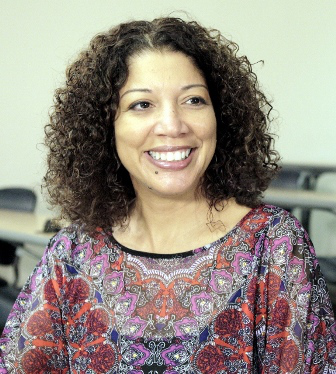
Professor Olympia Duhart, J.D. (pictured) is the President of the Society of American Law Teachers and had several important points regarding the current state of minority faculty in large university environments. Minority faculty seem to benefit more than non-minority faculty from mentoring and guidance from other, more established faculty members, regardless of the race of their mentor. Mentorship helps to decrease the isolation and pressure to be more qualified than their non-minority peers that minority faculty often feel, by offering support, guidance, camaraderie, and validation. This relationship, as well as other forms of faculty community, can serve as a buffer to the negative effects of subtle, institutional racism and other forms of prejudice and help all faculty members thrive in their academic community.

The Commission on Diversity and Inclusion at UNF has established a mentoring network for minority faculty called "Noodles and Networking." Check out the list of upcoming events.

Tuesday, October 20, 2015

Post-graduate Well-being, Engagement, More Impacted by College Experiences than by College Type


"College is what you make of it" they say. Recent data from Gallup suggests that the qualities of universities where students enroll, such as whether they are public or private, large or small, very selective or less selective, have less impact on students' lives after graduation than is often thought. In fact, what seem to have the greatest impact on students' post-graduate levels of well-being and engagement in their work are six elements of the college experience in particular.

The quality of interaction between faculty and students was important for life after college, with the following experiences being the most highly related to positive long-term outcomes: graduates feeling supported by professors who cared about them, having professors that made them excited for learning course material, and having professors who encouraged their goals and dreams. Other impactful experiences seem to center more on translating knowledge learned in the classroom to practical settings, such as working on a long-term (at least one semester) project, having an internship or job that allowed them to apply what they had learned, and being actively involved in extra-curricular activities. Unfortunately, only 3% of graduates polled claimed to strongly agree that they had had all six of the most impactful experiences during their time at college.

Given this data, it seems that many collegiate measurements traditionally associated with well-being and work engagement of graduates, like rejection rates or student/faculty ratios, may be missing what can make college effective in preparing students for happy and productive lives post-graduation. Beneficial long-term outcomes stem from richness and depth in areas of the college experience like support and connection with faculty and hands-on opportunities that bridge the gap between classroom learning and practical application.


Monday, October 12, 2015

Exam Cramming Common, But Ineffective

Free College Pathology Student Sleeping Creative Commons (6961676525).jpg
Photo: D. Sharon Pruitt 
When it comes to undergraduates' plans for preparing for exams,
the strategy is often to ignore the "problem" of studying until the test is imminent. Students then study as much as possible in the span of one or two days to "learn" the material in time for the exam. The problem with this practice, called cramming, is that it does not work very well. This is especially true for students who are inconsistent with class attendance, as they really are left to learn all the covered material in the day or two prior to assessment.

Compared to the strategy of incremental learning, where students study recently covered material in a smaller amount every night or several times a week, cramming simply does not produce preferable short-term nor long-term results. The larger differences between incremental learning and cramming are found in performance is in long-term retention. When students cram, they are not adequately elaborating on the material they want to learn. Rather, they are only doing what is necessary to keep the material fresh in their minds for a short time. Once they have finished their exam, that information is no longer elaborated on with any additional repetition and, thus, disappears from memory fairly quickly. Incremental learning is done with more manageable amounts of information  across many repetitions, and on a much larger time scale, allowing for elaboration and consolidation that makes information much more likely to be assimilated into long-term memory.

Students will always be drawn to cramming, as it often get results that are "good enough." Students may benefit from instructors encouraging students to abandon cramming so that the students remember material from their course after final exams are turned in.